Have you ever wondered what actually happens to your placenta after you book encapsulation? You are not the only one! It is one of my favorite things to explain, because once families see how much care goes into each step, they feel so much more at ease.
I am an APPA-trained placenta encapsulation specialist and birth doula in Oklahoma City. In this post, I will walk you through the placenta encapsulation process from booking all the way to the moment your capsules arrive at your door.
The quick answer
To encapsulate a placenta, a trained specialist cleans it, gently steams it, slices it thin, dehydrates it until it is completely dry, grinds it into a fine powder, and places the powder into capsules. With the Traditional Method I use, the whole process takes 2 to 4 days from pickup to delivery, and every placenta is processed on its own under strict hygiene standards.
Before your birth: planning ahead
The encapsulation process actually starts during pregnancy! Here is what happens before your baby arrives:
-
You book your specialist. Most families reserve their spot in the second or third trimester.
-
You talk with your provider. I always encourage families to bring their questions to their OB or midwife first. Here are the questions I recommend asking.
-
You let your birth place know. Tell your hospital or birth center that you plan to keep your placenta, and add it to your birth plan.
-
You pack a cooler. A small cooler and a couple of large zip-top bags in your birth bag make the day of birth so much easier.
The day of birth: keeping your placenta safe
Once your baby is born, your placenta is delivered shortly after. Here is what happens next:
-
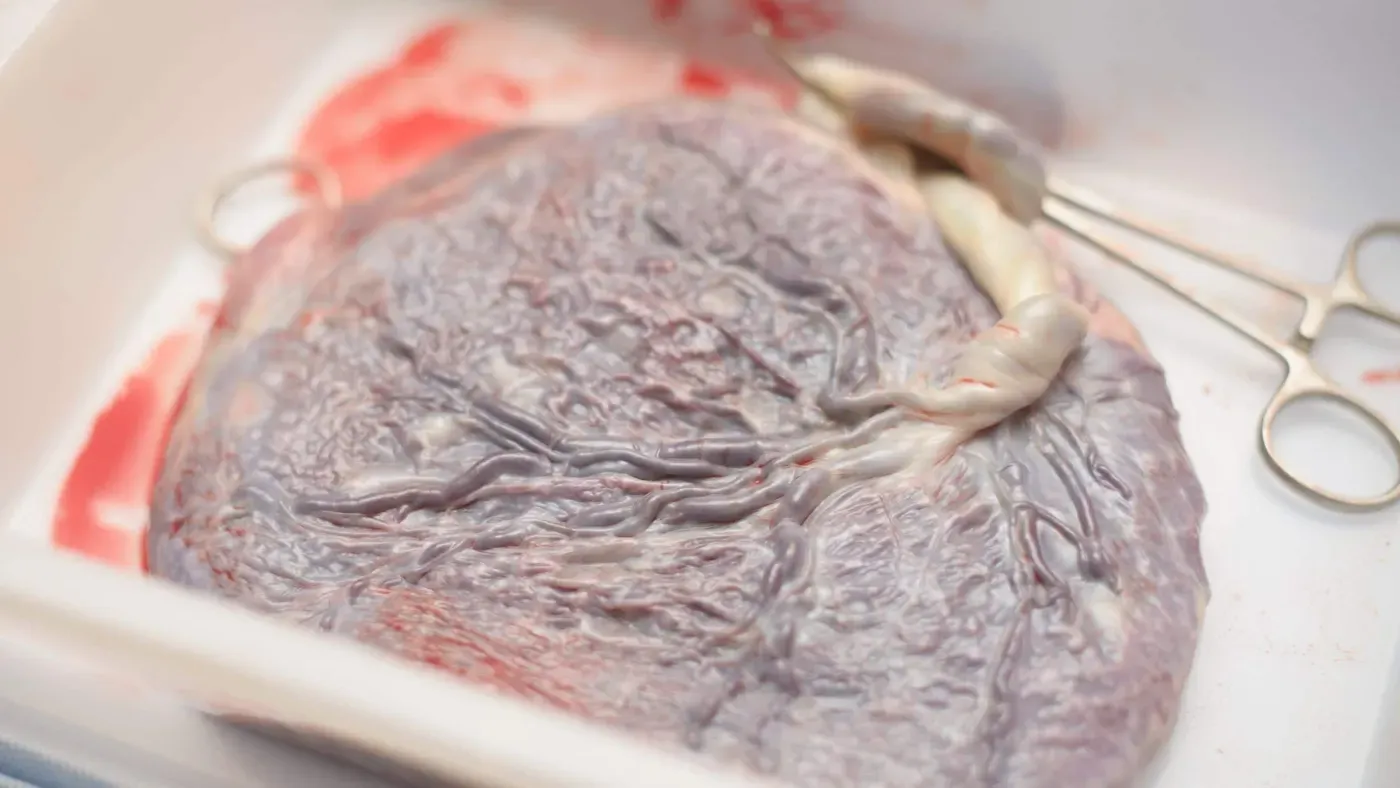
Your care team places your placenta in a clean container or bag.
-
It goes on ice or into a refrigerator right away. Keeping it cold from the start is one of the most important steps in the whole process.
-
You let your specialist know your baby has arrived. A quick text is all I need!
-
Your specialist picks it up. I collect your placenta from your hospital, birth center, or home, so you never have to transport it yourself.
If you develop a fever or infection during labor, or your placenta is sent to pathology, let your specialist know right away. Encapsulation may not be recommended in some of these situations, so it is best to check in with your provider too.
The placenta encapsulation process, step by step
Here is exactly what happens once your placenta is in my care. Every placenta I prepare follows these same steps, and I process only one placenta at a time.
Step 1: Preparing a sanitized workspace
Before I begin, I set up a fully sanitized workspace and equipment following OSHA and bloodborne pathogen standards. Your placenta is the only one in my workspace from start to finish, so it is never mixed up with anyone else’s.
Step 2: Placenta print and cord keepsake (if you chose them)
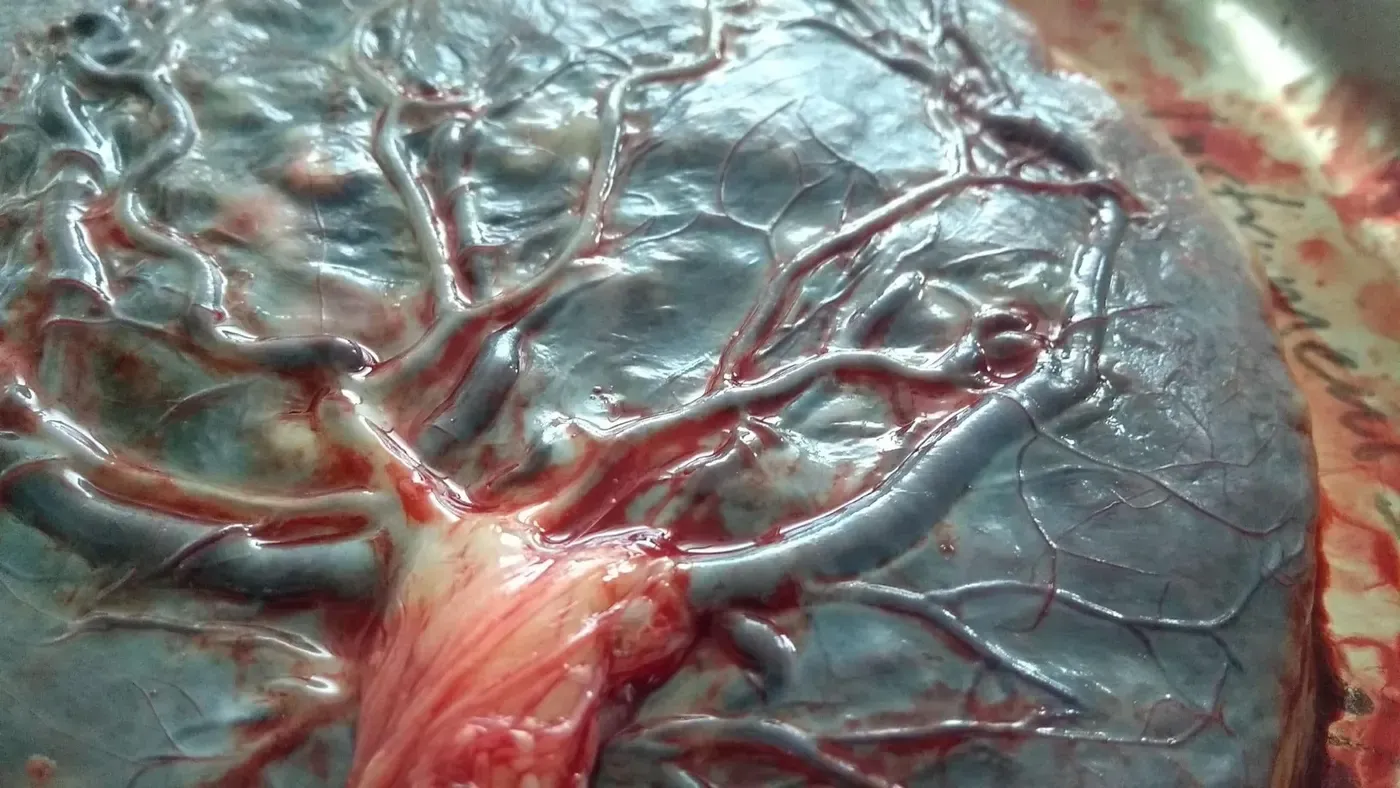
If you ordered a placenta print, I make it first, while the placenta is still fresh, by gently pressing it onto paper or canvas to capture its “tree of life” pattern. I also set aside the umbilical cord to shape into a heart or spiral for your cord keepsake.
Step 3: Cleaning and inspecting
I rinse the placenta thoroughly and carefully remove the cord. This is also when I look over the placenta to see if there is anything unique or notable about the placenta that I can report back to you. Some clients like to know about these unique, little quirks.
Step 4: Gentle steaming
With the Traditional Method, the placenta is steamed before it is dried. Steaming is a key part of what sets this method apart from the raw method.
Step 5: Slicing and dehydrating
Once steamed, the placenta is sliced into thin strips and placed in a dehydrator until it is completely dry. Dehydrated placenta becomes firm and crisp, which is exactly what we want for the next step.
Step 6: Grinding into a fine powder
The dried placenta is ground into a fine, even powder.
Step 7: Filling the capsules
The powder is carefully filled into capsules. The number of capsules depends on the size of your placenta, so every family’s count is a little different.
Step 8: Packaging and delivery
Your capsules are placed in a clean, labeled jar along with your cord keepsake, any add-ons you ordered, and care instructions. Then I deliver everything right to you!
Traditional Method vs. raw method
You may see two main methods when researching placenta encapsulation:
| Traditional Method | Raw method | |
|---|---|---|
| Steamed before drying | Yes | No |
| Dehydrated and ground | Yes | Yes |
| Why families choose it | The placenta is heated during preparation | Some families prefer that it is not heated |
| What I offer | Yes, this is the method I use | No |
I use the Traditional Method because steaming adds a heating step before the placenta is dried. If you are comparing specialists, ask which method they use and why.
Placenta tinctures, salves, and other add-ons
Your placenta can become more than capsules! These add-ons are made during the same process:
-
Placenta tincture: a small portion of prepared placenta steeped in alcohol, which lasts a long time
-
Placenta salve: placenta blended with nourishing oils and butters into a topical balm
-
Placenta print: a one-of-a-kind art print, made before processing begins
-
Cord keepsake: your baby’s dried umbilical cord, shaped into a heart or spiral
Curious about other ways to honor your placenta? Read 3 placenta traditions to honor your placenta.
Caring for your placenta capsules
Once your capsules arrive, a little care keeps them in great shape:
-
Keep them cool and dry. Store your jar in a cool, dark place away from heat, sunlight, and moisture, like a kitchen cabinet away from the stove.
-
Use clean, dry hands when you open the jar.
-
Ask about long-term storage. If you want to save capsules for later, your specialist can tell you the best way to store them, including whether to freeze them.
-
Follow your care instructions. Every family I work with receives written instructions with their capsules.
-
Check in with your provider. If you ever feel unwell while taking your capsules, stop taking them and contact your provider.
DIY placenta encapsulation vs. hiring a specialist
Can you encapsulate your own placenta? Some families do, but I always recommend working with a trained specialist. Here is why:
-
Safety and hygiene. A trained specialist follows bloodborne pathogen and food safety standards, uses a sanitized workspace, and knows how to handle a placenta safely at every step.
-
Knowing when not to encapsulate. Specialists are trained to recognize situations where encapsulation may not be recommended.
-
You get to rest! The first days after birth are for healing, feeding, and snuggling your baby, not for processing a placenta.
-
Pickup and delivery. A local specialist handles transport, so your placenta stays cold and you never have to leave home.
If you are outside of Oklahoma, look for a specialist with formal placenta encapsulation and bloodborne pathogens training who processes one placenta at a time. My questions to ask before you decide include a full list for choosing a specialist.
Frequently asked questions
How is a placenta encapsulated?
A trained specialist cleans the placenta, steams it (with the Traditional Method), slices and dehydrates it, grinds it into a fine powder, and fills the powder into capsules.
How long does placenta encapsulation take?
With me, you receive your capsules within 2 to 4 days of pickup. Timing varies between specialists, so ask yours when you book.
How many capsules does one placenta make?
It depends on the size of your placenta, so every family’s count is a little different.
How long do placenta pills last?
It depends on how they are stored. Keep them cool and dry, and follow your specialist’s instructions for long-term storage.
What is the difference between the Traditional Method and the raw method?
The Traditional Method steams the placenta before it is dehydrated, while the raw method skips steaming. I use the Traditional Method.
Can I still get a placenta print and cord keepsake?
Yes! Prints are made first, before processing, and a cord keepsake is included with my encapsulation whenever possible.
Placenta encapsulation in Oklahoma City
I would love to care for your placenta! I serve families across Oklahoma City and Central Oklahoma, pick up your placenta from your birth location, and prepare it with care, one placenta at a time.
Learn about my placenta encapsulation services
Want to learn more first? Read my honest guide to placenta encapsulation benefits: what parents report and what research says.